For most of the last decade, software outsourcing was primarily associated with one thing: reducing costs. Companies searched for lower hourly rates, offshore teams, and cheaper development options, hoping to balance affordability with acceptable quality.
That mindset is changing. In 2026, businesses are choosing software development partners based on expertise, delivery reliability, and long-term business value rather than simply selecting the lowest proposal.
Organizations are discovering that the true cost of software isn't determined by the initial quote. It's determined by the quality of the solution, the experience of the engineering team, and whether the software continues creating value years after launch.
Why Cost Is No Longer the Main Driver
If you've recently compared software development companies, you've probably noticed that many no longer compete solely on pricing. Instead, they emphasize senior engineering talent, product strategy, scalable architecture, security, and business outcomes.
This reflects a broader shift across the technology industry. Businesses increasingly recognize that choosing a development partner is a strategic decision rather than a procurement exercise.
According to Deloitte's Global Outsourcing Survey, access to skilled talent and business agility have become just as important as cost reduction when organizations evaluate outsourcing partners.
The Global Talent Shortage Changed Everything
Hiring experienced software engineers has become significantly more difficult over the past several years. Organizations across the United States, United Kingdom, Canada, Australia, and the UAE continue competing for the same pool of experienced developers.
At the same time, businesses are adopting AI, cloud-native technologies, automation, and modern SaaS platforms much faster than internal hiring can keep pace.
Rather than waiting months to recruit specialists, many companies now partner with software development firms that already have experienced teams capable of delivering complex solutions.
This approach shortens hiring cycles, reduces project delays, and allows organizations to focus on growing their business instead of constantly recruiting technical talent.
The Software Outsourcing Market Continues to Grow
Industry research from Mordor Intelligence estimates the global software development outsourcing market at more than $618 billion in 2026, with continued growth expected over the next five years.
This growth isn't happening because outsourcing is becoming cheaper. It's happening because businesses need faster access to specialized expertise that is increasingly difficult to build internally.
Organizations are outsourcing cloud engineering, AI implementation, DevOps, cybersecurity, enterprise modernization, and digital transformation projects where experienced specialists create significantly more value than simply adding more developers.
What Value-Driven Outsourcing Actually Means
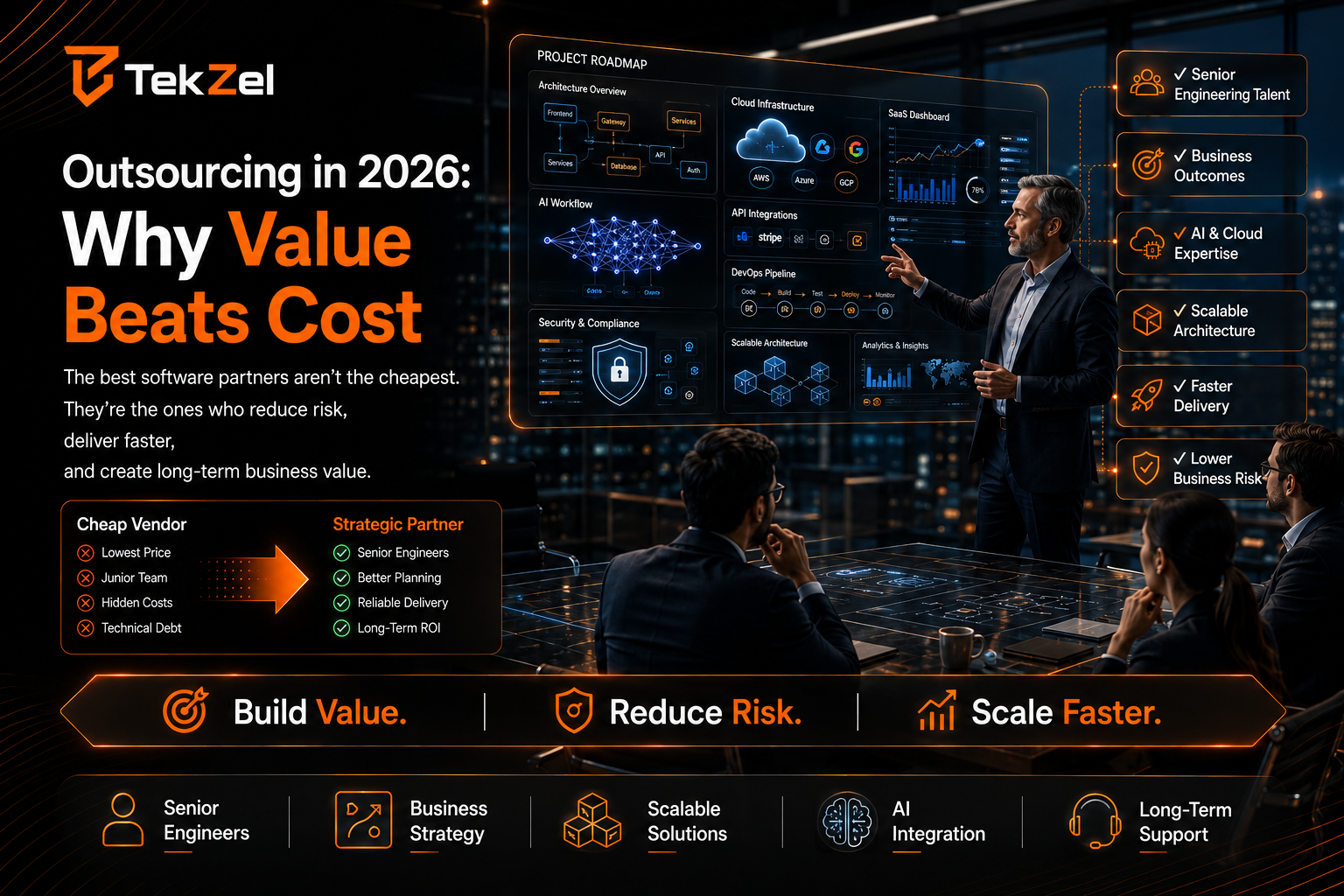
Value-driven outsourcing doesn't mean paying more. It means investing in a partner that helps reduce long-term business risk while delivering better outcomes.
Instead of measuring success by hourly rates alone, companies evaluate outsourcing partners based on technical expertise, communication quality, delivery predictability, scalability, and the ability to solve real business problems.
A lower quote may still represent good value, but only if it includes proper planning, experienced engineers, scalable architecture, and realistic project expectations.
Cost-First vs Value-First Software Development
Common Mistakes Buyers Still Make
Although outsourcing priorities have evolved, many businesses still compare proposals using outdated purchasing habits. Focusing only on the initial price often results in expensive problems later.
- Comparing hourly rates instead of business outcomes.
- Skipping the discovery phase to receive a faster quote.
- Choosing the fastest delivery timeline without understanding what has been excluded.
- Ignoring communication quality during early discussions.
- Not asking who will actually work on the project after the contract is signed.
These decisions can lead to missed deadlines, unexpected change requests, technical debt, and software that no longer supports the company's long-term goals.
A Practical Example
Imagine a retail company planning to replace its outdated inventory management system across multiple locations. Three software development companies submit proposals.
Two vendors propose similar budgets and timelines after conducting discovery workshops. A third vendor offers a price nearly thirty percent lower while promising delivery almost two months earlier.
At first glance, the cheaper proposal appears to provide the best value. However, it contains very little information about offline synchronization, disaster recovery, scalability, and long-term maintenance.
The other two vendors identify several business risks during discovery, including unreliable internet connectivity across store locations and the need for real-time synchronization.
The business chooses one of the higher-priced proposals. Months after launch, the offline synchronization capability becomes one of the most valuable features because it allows stores to continue operating during network outages.
The lowest proposal wasn't necessarily cheaper. It simply omitted one of the business's most critical requirements.
What a Great Software Development Partner Looks Like
A value-focused software partner spends time understanding your business before discussing technology. Instead of immediately estimating development hours, they ask questions about users, workflows, goals, and long-term growth.
- They identify risks before development begins.
- They explain technical trade-offs in simple business language.
- They recommend priorities instead of blindly accepting every feature request.
- They involve senior engineers during discovery and architecture planning.
- They build software that is maintainable, scalable, and secure.
Questions Every Buyer Should Ask
Before selecting a software outsourcing partner, ask questions that reveal how they think rather than simply what they charge.
- Who will actually work on this project?
- How much senior engineering involvement is included?
- What business risks do you already see?
- What trade-offs would you recommend before development begins?
- How will this software scale as our business grows?
- What happens after the project goes live?
- How do you manage security, testing, and quality assurance?
The quality of these answers often reveals more about a software development company than the price listed in its proposal.
Our Perspective
At TekZel, we believe software outsourcing should create long-term business value rather than simply reduce development costs. Every successful project begins with understanding the business challenge before recommending technology.
The best software partners aren't those who promise the cheapest price or the fastest timeline. They're the ones who understand your goals, communicate openly, identify risks early, and build solutions that continue delivering value as your business grows.
Final Thoughts
Software outsourcing has changed significantly. Cost savings remain important, but they are no longer the primary factor driving successful partnerships. Businesses increasingly prioritize expertise, strategic thinking, technical leadership, and reliable delivery.
When evaluating software development proposals, look beyond the hourly rate. Consider the team's experience, communication, planning process, architecture decisions, and ability to support your business long after the initial launch.
The best outsourcing decision isn't always the cheapest one—it's the one that creates the greatest long-term value for your business.
Ready to Choose the Right Software Development Partner?
Whether you're building a SaaS platform, enterprise application, AI-powered product, or custom business software, TekZel helps organizations make informed technology decisions through transparent planning, experienced engineering teams, and scalable software solutions.
Schedule a free discovery consultation with TekZel and learn how the right software partner can help you reduce risk, accelerate delivery, and build technology that supports your business for years to come.